Contemporary Indian Literary Fiction · Thriller · Neo Noir
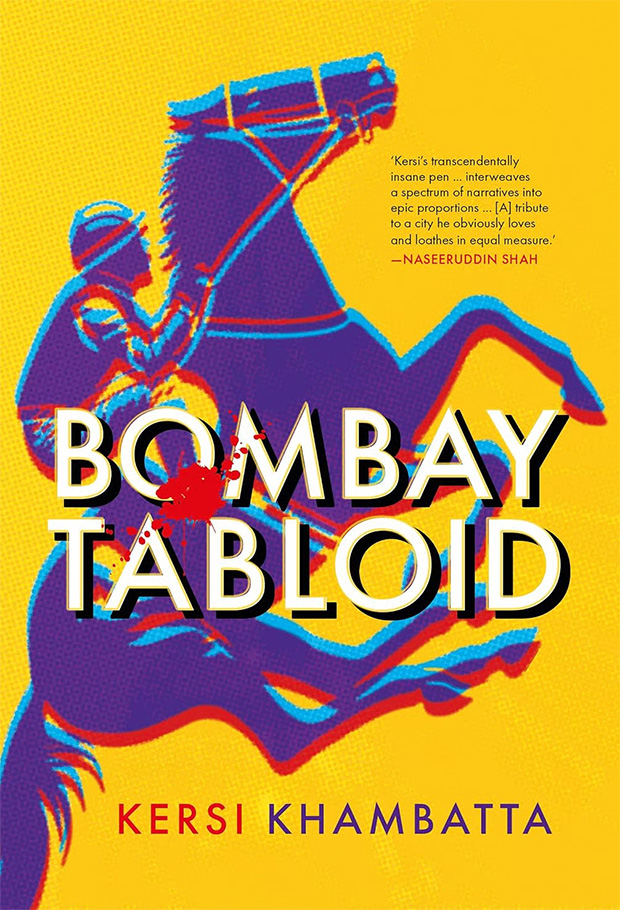
Bombay Tabloid
Speaking Tiger
“This is how a story needs to be told. Brilliantly. Kersi Khambatta style.”
★★★★★
Reviewed by Subhojit Sanyal
First — when I first picked up Kersi Khambatta’s Bombay Tabloid, I didn’t really connect him with the Kersi Khambatta that we all know and love, the writer of extremely cult-popular films like Being Cyrus and Finding Fanny. Typical armchair intellectual that one slips into every now and then: I never went behind Saif and Deepika, and at best, Homi Adajania.
But like everyone else — well, maybe not everyone, but most of everyone else, these movies have a special place in my heart. Not just for style and treatment, but for the way these stories were crafted. They told weird tales even more weirdly. That’s where their true attraction was.
And second — when I picked up Kersi Khambatta’s Bombay Tabloid, I totally culturally appropriated the book. It was written by a man called Khambatta and it had Bombay (not Mumbai) on the cover, in the title itself. This was going to be a Parsi roller-coaster in the most-loved city of India and I was bloody well all for it.
It wasn’t too long thereafter, maybe some 30–40 pages in, when something started gnawing at me. “This doesn’t seem like just about any Parsi man’s writing!”/”Why does this mad-rush style of drugs, pulp, and gore feel so fascinating? I have seen this somewhere!”/”What the effing F did I just read!!??” — and so unable to restrain my curious curiosity, I came upon the “About the Author” flap.
Everything made a lot more sense post that point. For me. Personally.
Bombay Tabloid is set in Bombay. Not Mumbai. And it’s a mad ride starting from then, to eventually when the city became Mumbai — and right till the very last page. The narrative follows a non-linear structure, something which gets explained as we fly through the pages — and something that makes a lot of sense, too. And we are introduced to some of the most amazing characters that have come out of India’s literary fiction stable recently — and from what I at least got, some of the most good-looking as well.
If you were to read the blurb at the back, you’d know what the story is about. Two brothers — in a way — and their story through the ages. And in the middle (and a little to the left) is one woman. Though very honestly, two. And that is pretty much the entire crux of it.
What you would miss completely is the brazen savagery of the writing, the sheer adrenaline rush you would get from flipping the pages, the favouritism you build along the way, the way in which you back some characters over the other — it literally makes the entire book come alive to you. You’re not just a passive reader anymore, you are in there, within the pages, rooting and cursing, helping and hindering.
And the damn thing just can’t go fast enough. You are severely out of breath balancing the big and bold brick of a book in your hands, changing postures and positions — and in all honesty, sometimes jumping over a paragraph or two because you needed to get there to the end. You needed to know what happened. The thrill wasn’t just a part of you; it overtook you at times.
Plus, the true essence of the book dawns on you when you finally turn the final page, read Mr Khambatta’s little note at the end, and you realise that it will be a long, long time before you pick up another book because these characters aren’t going away anywhere soon enough. If you’ve ended up with “…wonder what Devika’s up to right now” — then you know you’ve read an unputdownable page-turner. Yes, I used both standard terms for a reading blockbuster and I used them together. I dared.
Now to critique, since I must — I don’t really know how this would be done, but the acid rush this book gave me could have been slowed down a tad bit. Just to leave me some room to breathe. A sedative to calm down, but not to stop. It’s a tough ask, but one that perhaps could have helped pace the book out for some (definitely not me, I have zero complaints).
But seriously, what a phenomenal book. Two brothers into the noon-day sun shall sail, but only one of them will find Red Rackham’s treasure. And you’re there with them, watching, plotting, burning — and eventually resigning to fact, to fate.
This is how a story needs to be told. Brilliantly. Kersi Khambatta style.