Literary Fiction
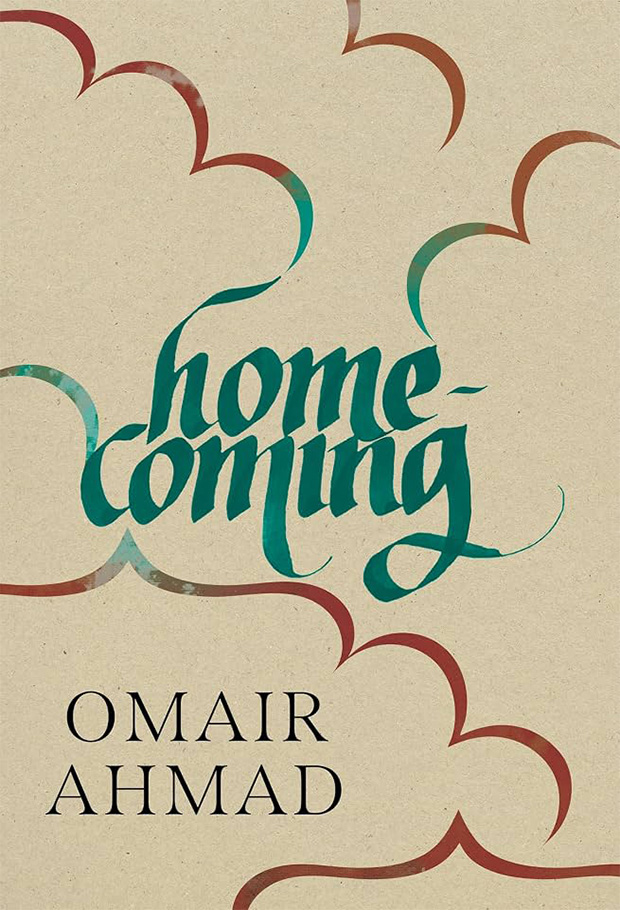
Home-coming
Speaking Tiger · 2026
“It is not power that destroys a place so much as dirt.”
★★★★½
Reviewed by Debdatta Mallik
Ahmad writes from a certain distance: born in Aligarh in 1974, schooled in Saudi Arabia and at Woodstock in Mussoorie, and since then an analyst, reporter and political adviser between New Delhi, London and Washington, he works today out of India as managing editor, South Asia, for The Third Pole. This is familiar ground for him. Jimmy the Terrorist (2010), which won the Vodafone Crossword Book Award, set a young Muslim man's undoing in a small Uttar Pradesh town, and The Storyteller's Tale (2009) turned a sacked Delhi into a night of exchanged stories. Homecoming is the gentler book, pressing on courtesy where the earlier novels pressed on violence. In Homecoming, his Lucknow is made of thin clay bricks called lakhori eeth, no longer made, so the old buildings crumble "without even a chance of restoration" (p. 128) — a far more disturbing image than any bulldozer, because nothing can be done about it. It is a city of a thousand small transactions: a tailor's shop that is narrow outside and improbably deep within, a bookseller who came from the land that became Pakistan and turned himself into an institution, an all-night mushaira in a qasbah where over a thousand people stand in a college ground until the pre-dawn azaan. Ahmad keeps the idea of the city and the actual pavement in the same frame, and he is honest enough to let a character say, of the whole glittering edifice of Lucknavi manners, "however hypocritical it might be" (p. 157).
Here Ahmad writes with the authority of someone who has thought about language for years rather than looked it up. Urdu arrives not as decoration but as argument. The narrator's father, a ruined idealist, delivers a lecture on Wali Dakkani carrying the first Urdu divan, a poet's collected verse, north to Delhi, and insists that Indian nationalism began the day that common tongue was recognised. A young woman in England falls in love with the Urdu script before she can read a word of it, because it is "curly and funny and goes the wrong way" (p. 69). An elderly woman, felled by a stroke, finds that the Arabic of her prayers has become "a meaningless mumble of sound" (p. 63). And adab and tehzeeb are introduced precisely as words that translate as respect and culture but lose half their meaning the moment they leave Urdu — which is, in miniature, the whole book's essence — what cannot survive migration.
Structurally, the novel is more old-fashioned than its lyricism suggests: nineteen short chapters that alternate between two cities and two orphaned lives, each closing on a turn or a disclosure, so that the book advances by scene and consequence rather than by mood. That is worth saying, because a great deal of contemporary fiction has quietly abandoned the structure of the classical novel for the ruminations of a single consciousness poured into poetic prose — and Ahmad, who writes that way better than most when he chooses to, keeps subordinating it to story. The prose itself is quieter than the material. Ahmad writes long, accumulating sentences with a surprising fondness for the aphorism: "In a failing city, in a broken culture, we are all wounded, and we have made the giving and taking of pity into an art form" (p. 89). Or, on a cup of tea: "A sip for politeness, a sip for spite, a sip for gossip, and a sip to disguise every betrayal ever devised, from passion to poison, our past is written in a trail of tea leaves" (p. 96).
The characters may divide readers. Ahmed sahib — the elderly gentleman whose name, the narrator warns at the outset, is "a thin cloth to draw over his identity" (p. 20) — is one of the finest figures in recent Indian fiction, and he is built almost entirely from gesture: an apology offered while in agony, a surname added to an envelope as an afterthought, a crease ironed sharp "to the point of caricature" (p. 46). He does not develop, and that is the point. The novel's quiet cruelty is that his unchangingness is both his dignity and his tragedy.
Hassan, the narrator, develops a great deal, and Ahmad is unsparing about the direction. He begins as a man hiding in the cocoon of his professional competence and ends having been forced to see what his own comfort obscured. His father's shouted question — "Only equals can talk to each other, and listen to each other. When have we allowed them to be our equals?" (p. 159) — detonates very late, and turns a warm friendship into something far more uncomfortable.
Two women carry the book's politics. Begum Waheed, who seizes a crumbling household with a set of property papers and holds it for fifteen years against a man who never stops fighting her, is described as "a garnet of a woman" (p. 94) and earns it. And Samina — Sam in England, a conservator of calligraphy — delivers the novel's sharpest historical argument, on the tawa'ifs as the city's largest taxpayers and the patrons who kept its music alive until a Victorian administration reclassified them. The reply she receives from her aunt is better still, and it is the most quietly devastating thing in the novel: that the shame was imposed, yes, but that it was also made one's own.
The novel is not without its weaknesses. The Lucknow chapters are so alive that the England chapters, for all their tenderness, sometimes read as structural necessity. More awkwardly, Hassan narrates Samina's childhood, her aunt's interior life, even a woman's thoughts as she lies half-paralysed on a carpet. Ahmad hedges this with a device — memories as "flimsy things" (p. 51), stories assembled from what he was told — and the hedging is elegant, but it does not fully carry the weight placed on it; a reader is occasionally aware of an author reaching past his narrator. The historical digressions, superb in themselves, are sometimes loaded into dialogue that cannot bear them: no one speaks Ibn Khaldun across a lunch table. The cousin Athar is given a wound and then largely set aside. And the proofing is careless for a book of this quality — Roushan and Rashida drift in spelling, and at least one sentence is missing a verb outright.
None of it is fatal. Homecoming is a short novel that behaves like a long one, and it is doing something unusual: arguing that a composite culture survives not in monuments or in policy but in the manner one person uses toward another, and that this is both the frailest thing imaginable and the only thing that lasts.