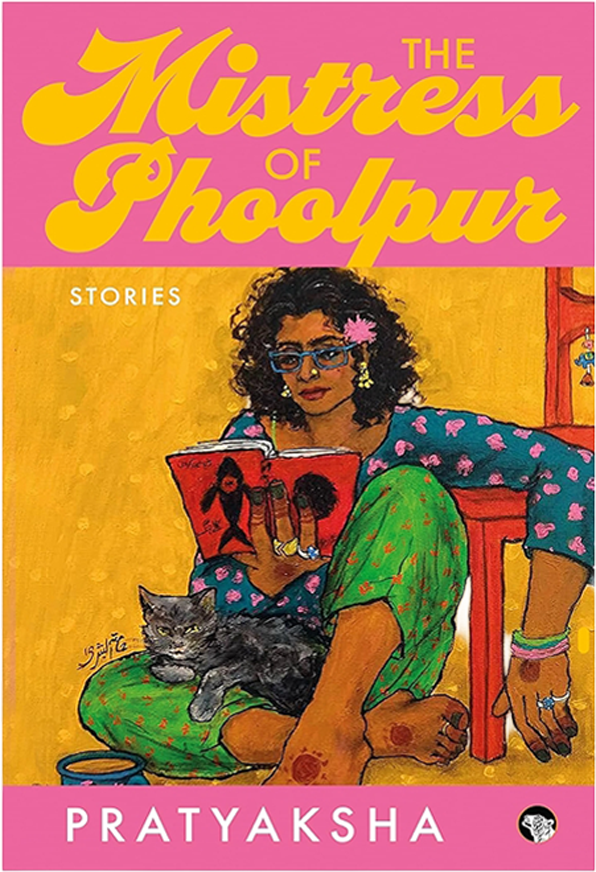
The Mistress of Phoolpur is an ambitious collection of stories that explores the inner lives of women navigating desire, loneliness, power and social expectation in small-town India. What immediately stands out is Pratyaksha's keen observational ability. She notices the tensions beneath everyday interactions and captures the unspoken currents that run through families, marriages and communities. There is also a fearlessness in the way she writes about female desire, refusing to reduce her women to either victims or heroines.
Yet despite admiring the author's intentions and considerable talent, I found myself increasingly distanced from the collection.
One of my biggest reservations is that many of the characters seem to be trying too hard to be ordinary and yet catch attention. The women often appear conventional but the author is determined to have them resist social expectations, while the men come across as perpetually dissatisfied, resentful or sexually frustrated. Over time, this creates an impression of India as a landscape dominated by repression and longing, where nearly every interaction is charged with some form of unfulfilled desire. While such experiences certainly exist, the repeated emphasis on them begins to feel less like insight and more like a literary preoccupation.
The stories themselves often feel less like stories and more like fragments of observation. Many seem to emerge from a mood, an image or a passing emotional insight rather than from a fully developed narrative. Readers who enjoy ambiguity may appreciate this approach, but I frequently found myself searching for a stronger sense of structure, progression and resolution. Too often, a story would end just as it seemed poised to arrive somewhere meaningful.
Pratyaksha's prose is undeniably distinctive. At its best, it is vivid, playful and rich with unexpected details. She has an eye for the absurd and the telling detail, and there are passages that sparkle with wit and originality. However, I often felt that the writing was trying too hard to be tongue-in-cheek, poetic and provocative at the same time. There is a constant effort to create irony, scandal or lyrical beauty, and occasionally the style draws attention to itself rather than deepening the story. Instead of being immersed in the narrative, I became conscious of the writer shaping every sentence.
What ultimately weakened the collection for me was the lack of emotional payoff. After each story, I found myself asking: to what end? What has changed, been revealed or been understood? Literature does not require tidy endings, but it does need to leave the reader with a sense that the journey mattered. Here, the accumulation of moods, observations and ambiguities often felt incomplete rather than profound.
That said, readers who enjoy literary fiction driven more by atmosphere than plot may find much to admire. Pratyaksha is clearly an intelligent and perceptive writer with a distinctive voice. For me, however, The Mistress of Phoolpur remained a collection rich in observation and intent, but one that rarely transformed those observations into stories that felt fully realised or emotionally satisfying.